
The Costa Blanca splits into two very different markets. Here is how to pick the right side for your budget, lifestyle, and rental ambitions in 2026.
Costa Blanca North vs South: Where to Buy in 2026
Drive an hour south from Altea and you are effectively in a different country. The Costa Blanca North and Costa Blanca South share a name and a coastline, but they are separate property markets with different prices, climates, buyer profiles, and rental dynamics. Choosing the wrong half is the most common mistake foreign buyers make.
Why the split matters
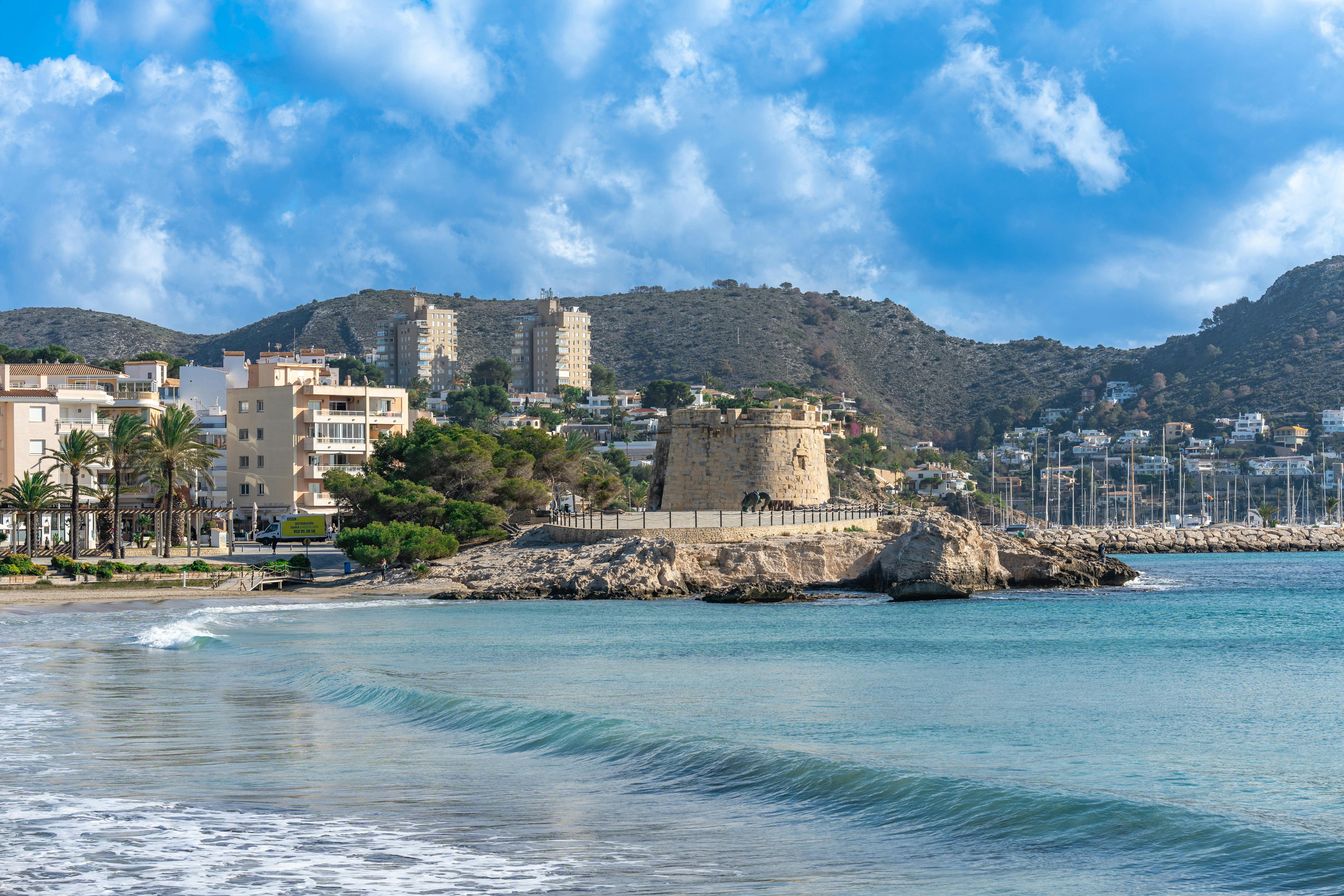
The dividing line sits roughly around Cala de Finestrat / Benidorm. North of that you get cliffs, coves, pine-clad mountains rolling down to the sea, and historic old towns. South you get long flat sandy beaches, salt lagoons, golf urbanisations, and a higher density of holiday-rental complexes.
Three differences drive most decisions:
- Climate microzones — the North averages slightly cooler, greener, and with more variation; the South is flatter, hotter in summer, and drier year-round.
- Property typology — North leans toward villas and detached homes built into hillsides; South leans toward apartments, townhouses, and modern golf-resort complexes.
- Price per square meter — broadly the South is 20–35% cheaper for comparable size and condition, which shifts the yield math significantly.
Same coast, two different bets — the North is a lifestyle bet, the South is a yield bet.
Costa Blanca North
The scenic half. Towns: Altea, Jávea/Xàbia, Moraira, Calpe, Dénia, Benidorm.
Vibe
International old towns, mountain backdrops, smaller scale. Strong Belgian, Dutch, and German communities. Year-round resident base, not just summer.
Prices and yields
- Average: €3,000–€7,000 / m²
- Premium pockets (Moraira, Altea hills): up to €10,000 / m²
- Long-term rental yields: 3.5–5%
Best suited to
- Lifestyle and retirement buyers who plan to spend half the year (or more) in Spain
- Buyers prioritising scenery, walkability, and an established expat community
- Long-hold capital-preservation strategies
Costa Blanca South
The value-and-volume half. Towns: Torrevieja, Orihuela Costa, Pilar de la Horadada, Guardamar del Segura, Punta Prima.
Vibe
Wider beaches, modern complexes with shared pools, urbanisation-style living, more British and Northern European retirees, more turn-key rental stock.
Prices and yields
- Average: €1,800–€3,500 / m²
- Premium pockets (Cabo Roig, La Zenia front-line): up to €5,500 / m²
- Long-term rental yields: 5–7%
Best suited to
- Investors targeting yield over capital appreciation
- Buyers prioritising sun-and-sea simplicity over old-town character
- First-time Spain buyers wanting a lower entry price
How to choose
When clients ask which half, we walk through five questions:
- Will this be primarily a home or an income asset?
- Do you want to be within walking distance of an old town, or is a car-first urbanisation fine?
- How much do you value scenery and elevation versus flat beach access?
- What is your price ceiling per m²?
- Do you plan to rent out when you are not there — and if so, short-term or long-term?
Two answers leaning toward lifestyle, scenery, and a higher ceiling almost always points North. Two answers leaning toward yield, simplicity, and a lower entry price almost always points South.
Bottom line
The North is a lifestyle bet — you pay more, you get more character, and you accept thinner yields. The South is a yield bet — you pay less, you get more straightforward stock, and you accept a flatter, sun-and-beach proposition.
Neither is objectively better. The mistake is treating the Costa Blanca as one market and not picking deliberately. For a candid view on which half fits your specific brief, speak with our team — we will show you stock from both sides and let the comparison make the case.
.jpeg)